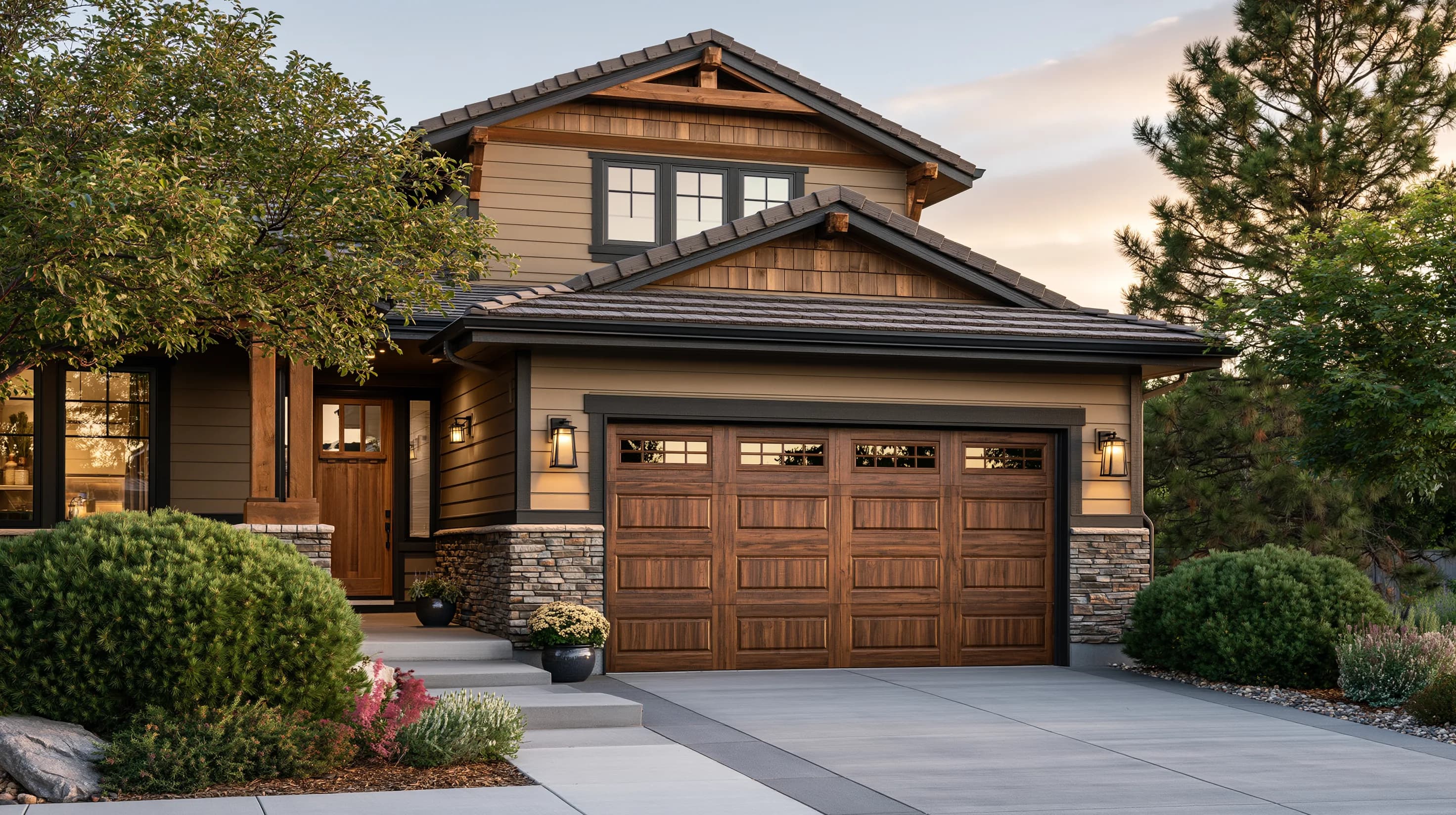
Garage door insulation matters more in Colorado than in most of the country. The Front Range sees temperature swings of 40–50°F in a single day, and winters that alternate between sunny 60-degree afternoons and overnight lows in the single digits. For homeowners with an attached garage — or any living space above or adjacent to the garage — the right insulation level makes a real difference in comfort and heating costs.
How Garage Door Insulation Is Measured
Garage door insulation is rated in R-values, just like wall and attic insulation. The higher the R-value, the better the thermal resistance. For residential garage doors in Colorado:
- R-6 to R-9: entry-level insulation. Adequate for a detached garage used mostly for storage. Less useful for attached garages or finished spaces.
- R-10 to R-13: mid-range. A reasonable choice for many Colorado homes with attached garages that aren't heated but connect to living space.
- R-16 to R-18+: premium insulation. Worth considering for attached garages where the space above, beside, or below the garage is heated living space, or for garages that are themselves conditioned or used as workshops.
Insulation Types in Residential Garage Doors
Polystyrene (EPS)
Rigid foam boards inserted into the door sections. Less expensive, lighter, and decent thermal performance. Good for detached garages and budget-conscious replacements where high insulation isn't the priority.
Polyurethane (PUR)
Injected foam that bonds to the door skin and fills the entire panel cavity. Higher R-value per inch than polystyrene, provides structural stiffness, and reduces noise. The better choice for attached garages in Colorado where temperature performance matters.
Why Attached Garages Are Different
An attached garage shares at least one wall with the living space. In Colorado winters, an uninsulated or poorly insulated garage door allows cold air to flood the garage, which then transfers through the shared wall. A well-insulated door doesn't turn the garage into a warm space, but it significantly reduces the cold air mass that's working against your home's heating system.
The same logic applies to spaces above the garage — bonus rooms, home offices, or bedrooms over an attached garage are notoriously cold in Colorado unless the garage below is properly insulated.
Does Insulation Also Reduce Noise?
Yes. Polyurethane foam in particular adds structural mass to the door panels, which helps dampen sound — both from outside (traffic, neighbors) and from the door itself during operation. For bedrooms adjacent to the garage, a quieter door is a meaningful quality-of-life improvement alongside the thermal benefit.
The Colorado UV Factor
Colorado gets more sunshine and higher UV exposure than most of the country. For steel doors, UV isn't a major concern — but for wood or wood-composite doors, UV-resistant finishes are worth specifying. Doors that face south or west see the most sun exposure and the most significant color fade over time without adequate surface protection.
When We Help You Choose
When Metro Denver Garage Door helps you select a replacement door, we look at how your garage is used, what's above and beside it, and what your budget allows — and then match an insulation level that's actually appropriate for your situation rather than just recommending the highest spec available.